Today at 01:04

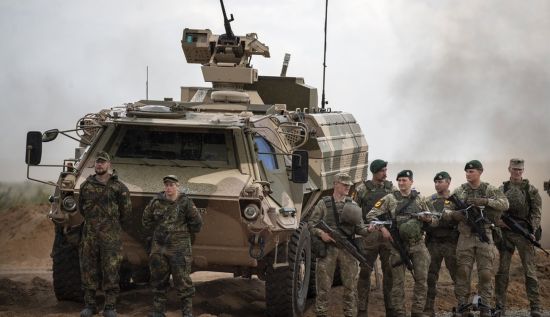
Currently, multiple scenarios are being explored for peacekeeping, monitoring, and deterrence missions involving international organizations such as NATO, the UN, and the EU to help end the war. However, any such peacekeeping mission in Ukraine can only be deployed if a ceasefire is first established. Dive in this topic with Petro Oleshchuk, political scientist, Ph.D, expert at the United Ukraine Think Tank, in his article for The Gaze.
Firstly, Oleshchuk argues that in the context of the Russian-Ukrainian war, deploying a peacekeeping mission faces major challenges.
Missions aimed at imposing or enforcing peace generally require the consent of all parties involved and often include authorization to use force. However, launching such an operation under the UN framework encounters a critical obstacle: Russia’s veto power as a permanent member of the Security Council.
An alternative approach through NATO mechanisms could be considered, but this carries a serious risk of direct confrontation with a nuclear-armed state. Traditional peacekeeping efforts—designed to maintain stability after a ceasefire—also seem unworkable at this stage. They rely on a mutually accepted political agreement and cooperation from both sides, conditions that are currently lacking.
Secondly, the expert explains that in April 2025, Ukraine formally requested its key allies to consider deploying a peacekeeping mission in the event of a peace agreement with Russia. Discussions were held with military representatives from Ukraine, France, and the United Kingdom. President Volodymyr Zelenskyy stressed the need for the presence of foreign troops on land, in the air, and at sea to secure peace and prevent future Russian aggression. It is expected that around a dozen countries, including the Baltic and Nordic states, may participate in such a mission. However, several nations—including the UK—have expressed reservations about joining without clear support from the United States, which remains uncertain.
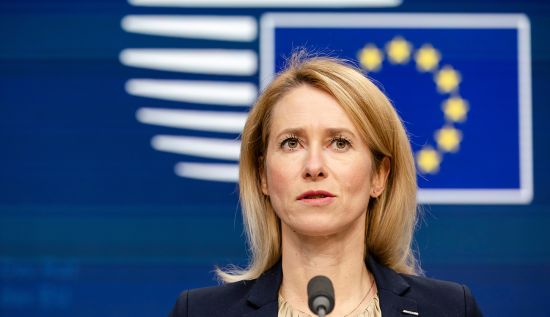
Also in April 2025, EU foreign policy chief Kaja Kallas stated that the European Union was exploring various formats for a potential peacekeeping mission in Ukraine. The options under consideration include a monitoring mission, a deterrence mission, a peacekeeping mission, a reinforcement mission, and a protection mission.
Kallas noted that different EU member states have varying interpretations of these formats and that discussions are still ongoing. She also emphasized that, since peace has not yet been achieved in Ukraine, it remains difficult to determine the most appropriate type of mission.
Finally, political scientist concludes that Peacekeeping missions could play a crucial role in ensuring stability in Ukraine once the active phase of the conflict ends. However, their deployment depends on several factors, including the political will of the parties involved, international backing, and the presence of an appropriate mandate.
In the short term, the most realistic option appears to be the deployment of a ceasefire monitoring mission, although its effectiveness may be limited. In the longer term, following a political settlement, a full-scale peacekeeping mission involving a broad coalition of international partners could become feasible.
Read the full article by Petro Oleshchuk on The Gaze: Designing a Peace Mission for Ukraine: What Would It Take
Read also: How Will the US-Ukraine Reconstruction Investment Fund Work?