Today at 14:22

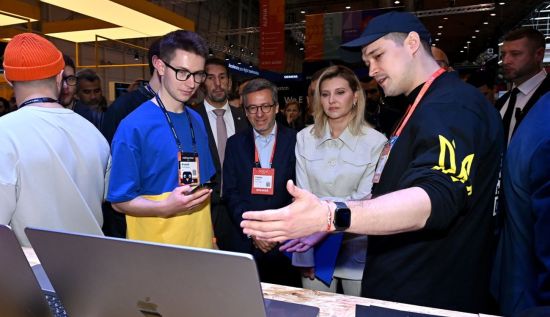
In the French city of Strasbourg, the spring session of the Parliamentary Assembly of the Council of Europe has begun. A number of important debates and the adoption of resolutions are expected, which will concern the creation of a Special Tribunal on the crimes of the Russian Federation, the Damage Register and compensation mechanism, and frozen assets of the aggressor state. More details were reported by FREEДOM TV channel correspondent Oleh Borysov.
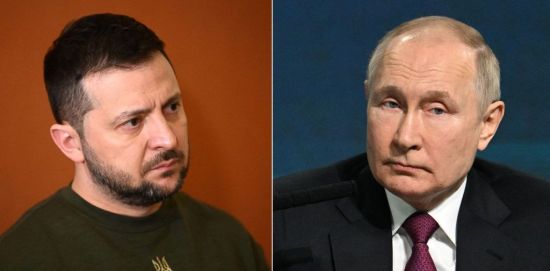
The spring session of the Parliamentary Assembly of the Council of Europe has started. One of the main messages and key topics is the Special Tribunal against Vladimir Putin. Due to the fact that last summer, in this very building, a document on the creation of a special tribunal was signed between the President of Ukraine Volodymyr Zelenskyy and the Secretary General of the Council of Europe Alain Berset, work is now continuing on the details. This includes financing, creation of mechanisms, and attracting as many countries as possible to the creation and development of the special tribunal.
Now, if we speak only about members of the Council of Europe, work is being carried out so that other countries also participate in the creation and financing of the special tribunal, for example Canada, which is not part of Europe but is also willing to participate in the creation of the special tribunal and be its participant. Because absolutely everyone in every corner of the world sees the aggression of the Russian Federation against Ukraine.
By the way, the Secretary General Alain Berset is one of the first in this institution to respond to all brutal attacks of the Russian Federation. All this is very important for the future agenda of the Council of Europe and for the adoption of future decisions.
It should be noted that in this institution there is unity around Ukraine. Moreover, it is not only about the special tribunal, but also about the development of compensation for Ukrainians for Russia’s aggression against Ukraine, as well as the fate of frozen assets of the Russian Federation. The Council of Europe and the Parliamentary Assembly of the Council of Europe have done a lot to ensure that these frozen assets are soon transferred to Ukraine.
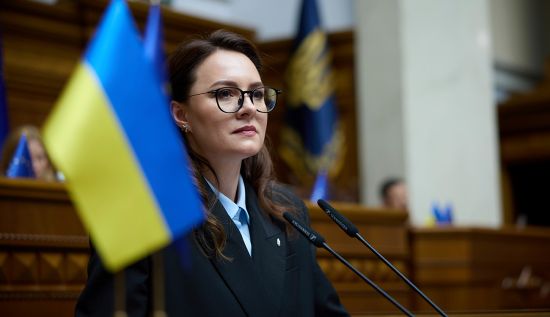
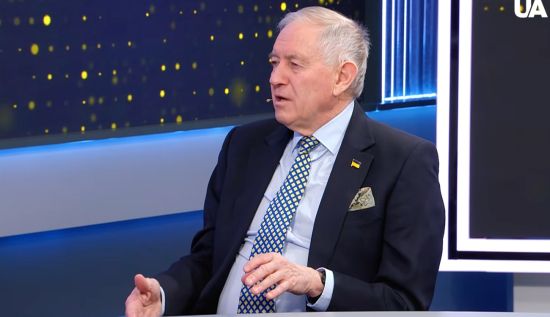
Member of Parliament of Ukraine, member of the Ukrainian delegation to Parliamentary Assembly of the Council of Europe Yelyzaveta Yasko briefly commented on the agenda for this week, what work has already started and what awaits us.
“In fact, this is one of the components of the topic of justice, which Ukraine very much needs — in the historical, legal, and political context. And since 2022, after the start of full-scale aggression, we have been working on this — in these corridors, at all possible legal platforms. Our diplomats are doing a lot of work to create a compensation mechanism, a Damage Register, and a Special Tribunal on Russia’s aggression against Ukraine. And in this same package — I will call it that — there is also the issue of frozen assets, which in fact is key,” said Yelyzaveta Yasko.
It is also worth noting that on Wednesday and Thursday there will be debates on the special tribunal. Of course, some of the latest attacks on Ukraine and brutal crimes will be voiced, which, as the correspondent reminded, is very important for bureaucratic, democratic European politics. Because absolutely every crime of the Russian Federation must be documented. And the more documented these crimes of the Russian Federation against Ukraine are, legally documented, the greater the chances to more quickly bring Vladimir Putin and the entire Putin military vertical to justice. This was stated by Yevheniia Kravchuk, who is currently in Strasbourg and is already participating in behind-the-scenes negotiations and work.
“We will talk about how the ideology of the ‘Russian world’ turns into concrete instruments of hybrid aggression against European states. For Ukraine, this session is an opportunity to keep in focus the issues of Russia’s accountability, justice for victims, and decisions that have long been overdue,” noted Yevheniia Kravchuk.
A lot of work is being done here so that already on May 15 in Chișinău, the process can be launched and the next stage of the agreement on the Special Tribunal against Vladimir Putin can be signed. It is precisely ahead of this agreement that a lot of work is now being carried out.
Why is this taking so long, and why is it necessary to work on it?
Because the legal component is very complex, and it is essentially being created from scratch. For the first time in history, such cases and accountability measures are being implemented against a sitting president of the Russian Federation. And now the entire legal doctrine, all legal aspects are being developed so that nothing is missed, and Vladimir Putin is held accountable. Both Ukraine and the European Union are working on this, including this institution — the Council of Europe.