Today at 01:03

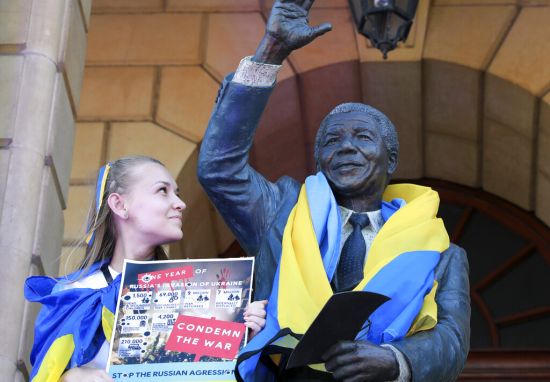
The European Union is discussing a plan that could grant Ukraine partial membership in the bloc as early as 2027, UATV English reports.
Under this proposal, Ukraine would gradually acquire the rights and obligations of an EU member state while continuing to fulfill accession criteria. The EU believes that Ukraine’s membership would not only provide security guarantees for the country but also stabilize the entire region. Despite Russia’s full-scale war, Ukraine continues to move actively toward EU membership.
Ukraine applied for EU membership on February 28, 2022 — four days after the start of Russia’s full-scale invasion.
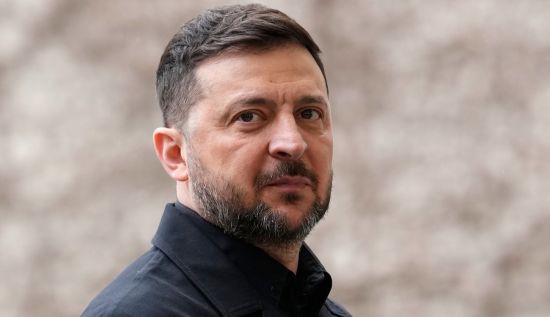
“We are grateful to our partners for standing with us, but our goal is to be together with all Europeans. And, most importantly, to be on equal terms. I am confident this is fair — we have earned it,” said President Volodymyr Zelenskyy.
The European Parliament later recommended granting Ukraine official candidate status, which Kyiv received in June 2022. In December 2023, the Council of the EU decided to open accession negotiations with Ukraine. In the summer of 2024, EU ambassadors approved the negotiation framework for Ukraine and Moldova, officially launching the talks.
Reform Progress
Candidate countries must implement reforms to align with EU laws and standards. Even amid full-scale war, Ukraine has demonstrated an impressive capacity to achieve objectives under tight deadlines, the European Commission noted. Kyiv has made progress in:
- Judicial reform
- Development of a functioning market economy
- Anti-corruption measures
- Public administration modernization
- Protection of national minorities
Marta Kos, European Commissioner for Enlargement, emphasized:
“The European Union is a peace project… We will accept you as soon as possible. This is a great success. We will report on each topic individually. We are here to ask and demand, but this is the best path — because we can achieve everything together.”
Partial Membership Plan
Brussels is developing steps that could allow Ukraine to gain partial EU membership by 2027.
The first step would provide Kyiv with informal recommendations across negotiation clusters.
The second concept, sometimes referred to as “reverse enlargement,” would allow a country to join first and then gradually obtain full rights and obligations. EU officials believe this could secure Ukraine’s European trajectory while giving Kyiv time to complete reforms in democratic and judicial institutions.
Bloomberg reports that Ukraine would receive clear timelines for meeting necessary requirements. Other options under discussion include maintaining the current accession process or introducing a transitional period with phased integration.
Brussels stresses that this does not mean lowering standards. It is not a simplification of reforms but rather a rethinking of enlargement under unprecedented wartime circumstances.
Kos noted that 26 EU member states support Ukraine’s future membership and expressed confidence that progress on opening all negotiation clusters could be achieved this year, though dialogue with Hungary remains necessary.
Political Obstacles
Hungarian Prime Minister Viktor Orbán remains the main political opponent of Ukraine’s EU accession. If Budapest’s obstruction continues, Brussels may consider invoking Article 7 of the EU Treaty, which could suspend Hungary’s voting rights — the most serious sanction available within the EU framework.
President Zelenskyy stated that Ukraine will do everything technically possible to be ready for EU membership by 2027 and urged partners to set an official accession date.
“Our membership in the European Union is the third component of security guarantees… If there is no date in the document, I believe Russia will attempt to block our membership in the future,” Zelenskyy said.
Economic Impact
Ukraine’s European integration is expected to become a cornerstone of Europe’s security architecture and postwar reconstruction. According to the Polish Economic Institute, Ukraine’s GDP could grow by 26% after accession. Neighboring countries, including Poland, Hungary, and the Baltic states, would also benefit from increased trade and economic integration.
Experts recall that the 2004 EU enlargement demonstrated how reduced trade barriers and deeper market integration accelerated economic growth for both new and existing EU members.
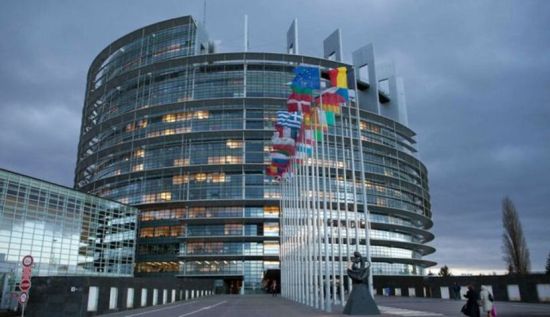
As previously reported, on February 23, EU foreign ministers discussed the 20th sanctions package against Russia and long-term assistance for Ukraine. Ahead of the meeting, the Ukrainian flag was raised outside the European Commission building in Brussels as a symbol of Europe’s resilience and hope.
Read also: UK Announces New Support Package for Ukraine on the Fourth Anniversary of the War