Yesterday at 21:26

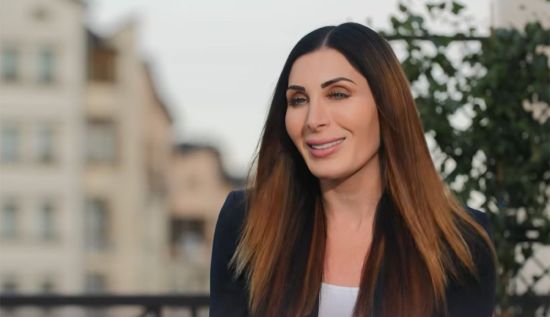
General Ben Hodges, in an exclusive interview with UATV, revealed key strategic aspects of the war. He called unacceptable for Ukraine any concessions involving formal territory transfer, NATO accession restrictions, and amnesty for war crimes. Hodges emphasized that any peace agreement without a strong alliance is just a pause before a bigger war.
The general clearly stated the strategic goal of the US: a sovereign Ukraine, a secure Europe, and deterring China, as supporting Kyiv is America’s best “insurance” against global war. Finally, Hodges explained that capturing Pokrovsk will not give Russia a strategic advantage since it lacks the strength for further advances.
Read the FULL interview between UATV English host Henry Keen and Retired U.S. Army Lieutenant General Ben Hodges, former commander of U.S. forces in Europe.
— General, do you believe the agreement will be signed?
— I think right now it seems unlikely because the sides are still very far apart. And I think it’s going to be hard to get to something that gives Ukraine what it needs and that the Russians would be willing to accept. So I cannot predict whether or not something will be signed, because the Russians are really going to have to change a lot on their side, and that would require, I think, President Trump to put pressure on them — which he has not done so far.
— Well, can you please try to name what you think are the unacceptable concessions for Ukraine? Obviously most of the plan seems to be unacceptable, but maybe name the main three that Ukraine should not accept in any way.
— First of all, clearly handing over territory — acknowledging Russian sovereignty over certain ground — is a non-starter. Ukraine should never, in my view, even if Russia occupies that land, formally hand it over. For all the years of the Cold War, the United States never recognized that the Soviet Union had occupied Estonia, Latvia, and Lithuania. We never formally recognized that. And I think it’s important that whatever land Russia sits on, nobody should formally recognize that. So that’s one red line.
Second, anything that prevents Ukraine from being fully capable of defending itself — whether it’s the size of the military, aspirations to join NATO, or types of weapons — anything like that. Ukraine is a sovereign country. So restrictions on its defense capabilities should also be a non-starter.
Third, the idea of a war-crimes amnesty for Russia. I don’t know how the world could even countenance that — the idea that Russians would be allowed to get away with murder. That should not be acceptable.
— Suppose the plan is agreed and Ukraine signs it. Do you really believe the United States has enough leverage over Russia to make the Kremlin abide by what they sign? Russians are famous for doing exactly the opposite.
— Yeah, I have zero confidence that Russia would ever live up to any agreement unless they were forced to. And yes, the President of the United States has all the leverage he needs. The problem is that he never uses it. He has never put pressure on Russia. He’s never told the Russians to get out of Ukraine. He cannot even acknowledge that Russia is the aggressor.
So he has enormous leverage he could use, but he hasn’t. Which means it’s going to take comparable leverage from a united Europe — economic pressure, weapons, ammunition, all kinds of support to Ukraine. Without that, Ukrainians would be wise to be very skeptical that Russia will live up to any agreement it signs.
— Right. So are you telling me that any peace agreement without strong security guarantees is just a pause before another war — maybe an even bigger one?
— I think the phrase “security guarantee” may not be the best one. The only real security guarantee is an alliance where other countries are by treaty obligated to come to your aid. Anything other than that — we’ve already seen that the US, UK, and Russia did not live up to the Budapest Memorandum. We didn’t do what we should have under the Minsk agreements.
So until NATO membership, the best we can do — without calling it a guarantee — is everything possible to help Ukraine defend itself: weapons, ammunition, investment in Ukraine’s defense industry, pressure on Russia, limiting its ability to export oil through India, China, Turkey, Hungary. These things can help deter Russia from attacking Ukraine again.
— What is happening now in Geneva? The negotiating team has already amended the infamous 28 points of the initial peace plan. What do you think was the motivation to even go for it in such tough conditions?
— I think we don’t know exactly what this whole — someone called it a “hot mess” — has been over the last few days. Clearly there was a Russian document. Then there was incoherence and confusion and finger-pointing inside the administration. You had senators being told one thing, and then people denying it. You had non-official, non-qualified people like Jared Kushner and Mr. Wickoff meeting in Miami with Kirill Dmitriev in a Russian-owned hotel. Bizarre.
Then you probably have political competition between Secretary Rubio and Vice President Vance. This was not America’s finest hour in diplomacy. And the president is not helpful when he consistently appears to support the Russian perspective.
I will give credit to Secretary Rubio — this morning was the first time I felt like he had finally gotten some discipline into the process and was leading the conversation. Hopefully, we get all the wild cards out, and then maybe we can figure out what the actual proposal is.
The Europeans have now come forward with their own proposals. So you need the US, Ukraine, and Europe aligned — and then you have to get Russia on board. Without the president putting enormous pressure on Russia, that’ll be a challenge.
— But you said earlier that the US should clearly formulate its strategic goal. Does that mean that at the moment you don’t see one?
— Yeah, I don’t. Other than “stop the killing.” The US has never — even under the Biden administration — clearly identified its strategic end state. What do we want the world to look like when this is over?
It should have been: Ukrainian sovereignty is respected, Europe is secure, Russia stays within its borders, China is deterred because of what they saw us do. And Ukraine gets on with modernization and reaches its aspirations of EU and NATO membership.
That would be the outcome. But it’s never been articulated. And I don’t see it coming now.