Yesterday at 21:26
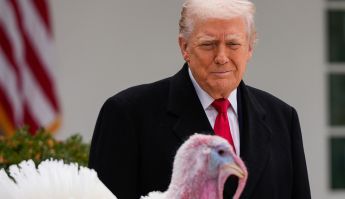
Internal Political Turbulence in Washington Drives the White House to Seek a Rapid Resolution of the “Ukrainian File”.
The Trump administration has entered a period of intense domestic political volatility, in which virtually every policy decision is evaluated less through the lens of international strategy and more through the imperatives of political survival in Washington. The controversy surrounding the Epstein files, an expanding series of investigations, mutual information warfare within the Republican Party, and persistent pressure from Democrats together create an environment in which Trump is eager to eliminate all “problem areas” that risk consuming the White House’s political capital. Ukraine has become one such issue—complex, costly, and highly sensitive within the context of U.S. domestic politics.
The traditional institutional inertia that once constrained presidential decision-making has significantly weakened. Bureaucratic structures are diminished, while Trump’s reliance on loyal insiders—illustrated by the Witkoff affair—is greater than ever. In this setting, the war in Ukraine is perceived not as a geopolitical priority but as a liability: its continuation brings no electoral benefits and instead fuels criticism portraying the administration as ineffective. Consequently, the White House appears intent on producing a rapid, highly visible “resolution,” even if the substance of such a peace proves damaging.
Read more in the article by Bohdan Popov, Head of Digital at the United Ukraine Think Tank, communications specialist and public figure.
Firstly, the expert explains that the scandal involving Steve Witkoff exemplifies how domestic political pressures can distort U.S. foreign policy. Leaked calls in which the U.S. special representative appears to seek guidance from Russian advisor Yuri Ushakov on how to navigate Trump’s preferences reveal the degree to which the administration has embraced a mindset of “ending the war at any cost.” The underlying logic is straightforward: if Russia agrees to negotiations, Washington can declare a peace breakthrough—regardless of the actual terms.
In this context, Ukraine risks being treated not as a strategic partner but as an expendable variable in the president’s internal political calculus. It becomes something that can be adjusted to suit electoral needs: lowering expectations on territorial issues, accepting a “pause without guarantees,” or presenting concessions as necessary steps toward stability. For the White House, the priority is not a durable or effective end to the war but the ability to showcase a rapid achievement.
Secondly, Popov argues that the danger of such an accelerated “peace” is that it would provide Russia with precisely the conditions it needs to regroup, rebuild its military-industrial capacity, and prepare for renewed aggression. Moscow has repeatedly demonstrated that it uses ceasefires to rearm and reorganize. Any truce lacking firm guarantees would offer Russia time to import technology, strengthen its economy, and reconstitute its forces.
Europe also stands to lose from a hasty American settlement. If Washington attempts to conclude the war at Ukraine’s expense, European states will confront a stark choice: acquiesce to U.S. pressure or pursue an autonomous strategy of containing Russia. Either trajectory heightens instability and undermines confidence in U.S. security commitments, weakening the Western coalition over the long term.
Finally, the specialist summarizes that for Ukraine, the critical task now is to avoid accepting hurried frameworks shaped by Washington’s political constraints. Kyiv must insist on robust security guarantees, long-term mechanisms to deter Russian aggression, and safeguards that prevent a repetition of scenarios in which Moscow exploits pauses to prepare for future offensives.
A quick peace is not a real peace—it is merely an intermission before the next war. This is a reality the Trump administration, preoccupied with domestic turmoil, appears unwilling to acknowledge. But neither Europe nor Ukraine can afford such short-sightedness.
Read the full article by Bohdan Popov on The Gaze: Why Donald Trump is Interested in a Quick, Not Quality, Completion of the War in Ukraine
Read also: Accountability Must Be Ensured for MH17 and Russia’s War Against Ukraine