Yesterday at 20:03

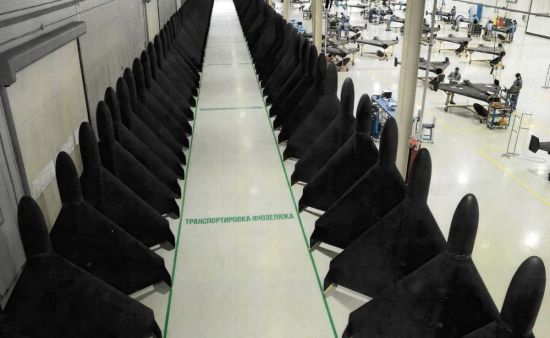
Ukraine, Poland, and Lithuania are shaping a new model of defense — one built not around heavy armor, but around autonomous drones and real-time tech superiority.
Read more in the article by Dmytro Levus, foreign policy expert, analyst at kyiv-based United Ukraine Think Tank.
Firstly, the author explains that more than three years into Russia’s full-scale invasion, the security logic of Eastern Europe is shifting. Instead of relying on classic NATO-style layered defense, states on the eastern flank are turning to mobile, technology-driven, relatively low-cost — but still highly lethal — deterrence built on the mass use of combat UAVs. Kyiv, Warsaw, and Vilnius are positioning themselves at the center of this shift and are already designing a joint system to deter Russia using autonomous unmanned platforms. This isn’t just a reaction to the current war — it’s a strategy for the long haul, for a future in which the Russian threat persists and the conflict may be “frozen” but not resolved.
Since 2022, Ukraine has gained unparalleled experience in drone-centric warfare — from naval surface drones that forced back the Russian Black Sea Fleet, to long-range strikes on oil refineries and airbases in Russia, to massive frontline FPV use. Western militaries now view this as one of the most important innovations of the war.
Secondly, policy expert argues that NATO data indicates that in 2024–2025, up to 50,000 FPV drone attacks were carried out on the Ukrainian front each month, with destruction rates against armored targets above 40%. In effect, Ukraine has been able to partially substitute artillery with drones, ease pressure on air defense by hitting Russian logistics in the rear with loitering munitions, and form a new combat culture built around unmanned systems.
Thirdly, Levus emphasizes that Poland and Lithuania, understanding that a new round of Russian pressure — whether through hybrid actions or a potential strike toward the Suwałki Gap — is only a matter of time, are choosing to invest not only in traditional weapons but also in “affordable strategic deterrence”: drone groupings along the border and at sea.
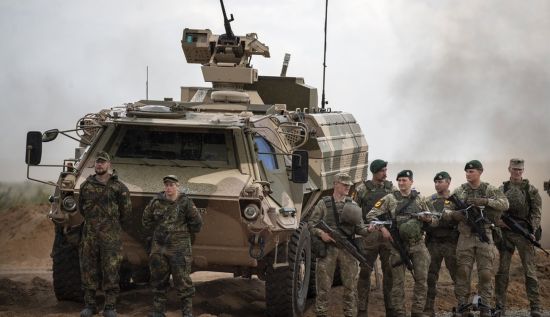
Since the beginning of Russia’s aggression, Poland, Ukraine, and Lithuania have tightened military cooperation — through the Lithuanian-Polish-Ukrainian brigade format, the Lublin Triangle, and joint drills. Now this cooperation is evolving into a shared system of technological deterrence.
Finally, the expert concludes that deterrence in the 21st century looks different: instead of tanks and large air formations, it is increasingly about swarms of UAVs — cheaper, quicker to deploy, and not dependent on mass mobilization. Ukraine, Poland, and Lithuania are proving that even next to a large-scale war, it is possible to build an effective security framework on technology, readiness to defend oneself, and trust among partners.
This is the new Eastern European formula: don’t wait for the strike — make sure the adversary constantly expects a wave of unseen drones on the horizon.
Read the full article by Dmytro Levus on The Gaze: Swarm Strategy: The Future of Deterrence in Eastern Europe
Read also: Without Ukraine, Europe Cannot Build a Just World: Interview with Mykola Tochytskyi