Today at 09:54

The Kremlin sacrificed hundreds of thousands of soldiers for a symbolic gain, while Kyiv is conserving its forces for a long war of attrition.
Russia has been trying to seize Pokrovsk for more than a year. It is one of the longest and most senseless offensive operations of this war. The Kremlin has thrown men and equipment at this sector with no clear logic or operational rationale, essentially repeating the tactics used in Bakhmut and Avdiivka: advance at any cost. Ukrainian units defending this area report staggering Russian losses – up to around one hundred thousand killed and severely wounded in the Pokrovsk direction alone during this time. This isn’t just a statistic – it shows how badly Russia has exhausted its own offensive potential.
For Ukraine, Pokrovsk is a difficult but expected phase of the war. The city is important, but not decisive in strategic terms. For Russia, however, it has become an obsession, a symbolic goal for which it has paid an enormous price in manpower. This asymmetry has become a defining trait of the Russian military effort: human life is treated as expendable.
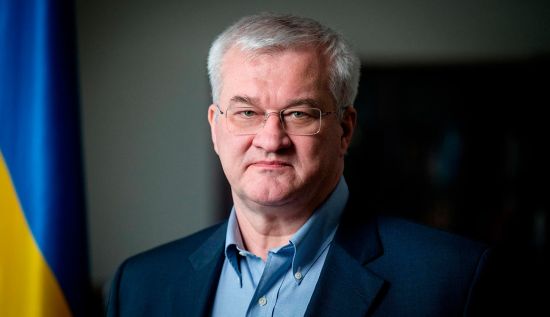
Read more in the article by Bohdan Popov, Head of Digital at the United Ukraine Think Tank, communications specialist and public figure.
Firstly, Popov argues that if a decision is taken to withdraw Ukrainian units, the logic is clear: preserving the lives of Ukrainian soldiers. The Ukrainian army, unlike the Russian one, does not fight frontal battles “to the last man.” The command values living troops more than any single point on the map. Pokrovsk illustrates how Ukraine’s strategy operates rationally – it does not allow Russia to grind down Ukrainian forces in places that offer no real strategic benefit.
Similar decisions were made in Bakhmut and Avdiivka. Those are the places where Russia suffered its highest personnel losses of the entire war. Open-source estimates suggest Russian casualties in the assault on Bakhmut may have exceeded 70–100 thousand killed and wounded, and under Avdiivka another 40–50 thousand. Russia “chewed through” these cities at the cost of its own offensive capability. Ukraine pulled its troops back and preserved its units – and that is what made it possible to hold the front in the months that followed.
Secondly, the author emphasizes that by taking Pokrovsk, Russia has gained control over the Pokrovsk mine and a large part of the Shevchenko lithium deposit, one of the most promising resource clusters in Donbas. Lithium is the key metal of the 21st century – essential for batteries, military systems and high-tech manufacturing. The capture of this deposit gives Moscow a chance to trumpet “resource victories” on its propaganda channels.
But the real economic benefit for Russia is highly questionable. Mining in an active war zone, cut off from legal export routes, international markets, and under heavy sanctions, is not a viable business model. It is primarily a picture for the domestic audience. Moscow will not be able to legalize lithium taken from occupied territory. The capitalization of these resources is effectively zero, and their strategic value cannot be realized without foreign technology and access to global markets.
Finally, the expert summarizes that Pokrovsk may become yet another pretext for Russia to repeat the same approach: once again grinding down its own army for a few more square kilometers. Ukraine, meanwhile, is preserving the forces that will continue to hold the line and shape the conditions of the conflict.
This war will not be decided by a single town on the map. It will be decided by the balance of forces, resources, and the ability to preserve one’s army.
Russia has already paid too high a price to realistically claim rapid dominance. Ukraine has kept the core of its army intact but urgently needs further reinforcement. That – and the West’s speed in providing it – will determine the future of Donbas.
Read the full article by Bohdan Popov on The Gaze: Russia’s Costly Assault on Pokrovsk Brings No Strategic Gain
Read also: Why the “Drone Wall” is Needed for NATO and Ukraine